
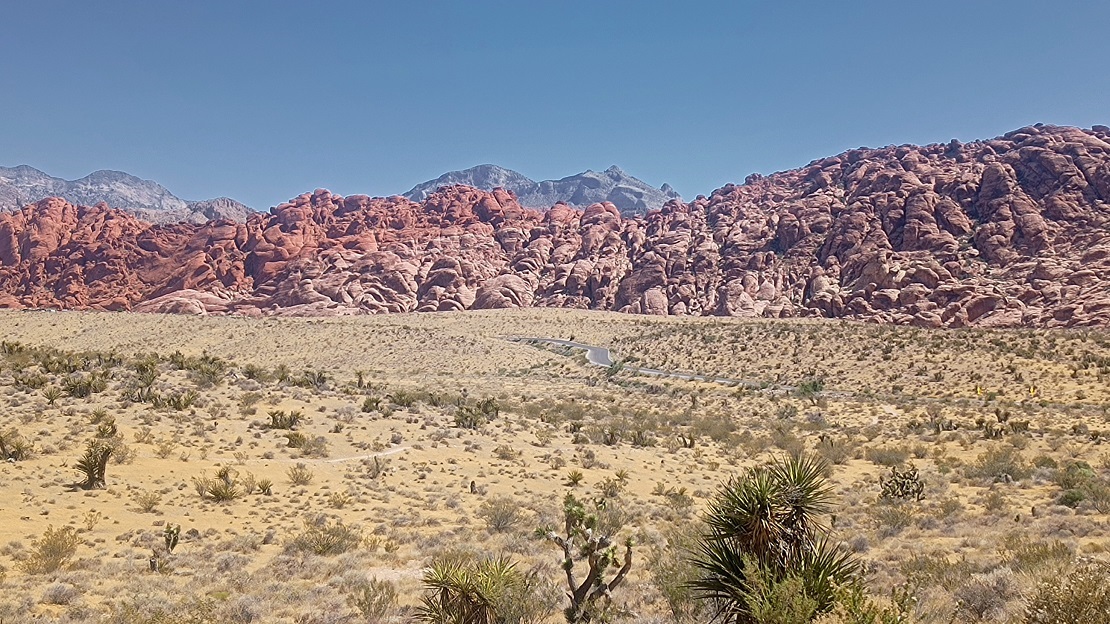
The desert of Red Rock Canyon
 23 July 2026
Being in Las Vegas, Nevada, without time to visit the great nearby US National Parks?…Discover the natural resources in the city’s hinterland!
Western Red Rock Canyon, together with the north-eastern Valley of Fire, are natural sites of geological relavance. These are National Protected Areas to preserve and manage all natural resources for present and future generations.
Nearly 200 million years ago, the Red Rock Canyon was covered by large, white dunes. Later, the sand cemented, creating streaks of red, ochre and whitish sandstone, as visitors can see nowadays.
The apparently lifeless and arid landscape keeps water within the rocks, where animals create burrows for shelter or protection from predators.
The local flora includes ‘Joshua trees’ which are typical of nearby Joshua Tree National Park in California and shrubs, agaves, yuccas.
Climate change warnings even affect this type of vegetation, despite its natural predisposition to the arid climate of the Mojave, one of the hottest deserts in the world (38°C-48°C in summer).
Depending on the annual and seasonal weather conditions, several species are found scorched by the sun even in spring, as it happened during this 2026.
The local fauna includes the ‘roadrunner’ and the coyote, sources of inspiration for the popular Warner Bros. cartoon characters, ‘Beep-beep the roadrunner’ and ‘Wile E. Coyote’.
Furthermore, there are foxes, rattlesnakes, desert tarantulas, lizards, white squirrels, desert tortoises and burrowing owls.
In the Red Rock Canyon, as in the Valley of Fire, you can also see forms of Rock Art which has cultural and spiritual relevance.
This type of art preserves the inlays of petroglyphs and pictographs painted by local ancestral natives, identified with the Anasazi and Southern Paiute tribes.