
Algarve: luxury-tourism and urban regeneration
 30 September 2026
How is tourism changing in the Algarve region, southern Portugal? Over the last decade, this coastal area has undergone a significant process of transformation and urban regeneration.
Supported by luxury tourism, eco-conscious urban planning has helped local people with work opportunities, avoiding social isolation and environmental degradation of certain coastal areas.
The unique character of these seaside micro-areas is preserved through sustainable architecture and landscape design, respecting local geomorphology, like the Vale do Lobo, with its scenic golf courses or the Praia dos Salgados, featuring eco-sustainable luxury facilities.
These high quality hotels offer tailor-made tourism solutions and customized services to all clients who are always the centre of attention, whatever they would like to do or wherever they would like to go.
Despite the positive impact of luxury-driven economic support, it is essential to focus on protecting the region’s cultural and environmental identity and tradition.
To prevent the Algarve region from becoming a mass tourism destination, it is important to preserve its local cultural and natural characteristics.
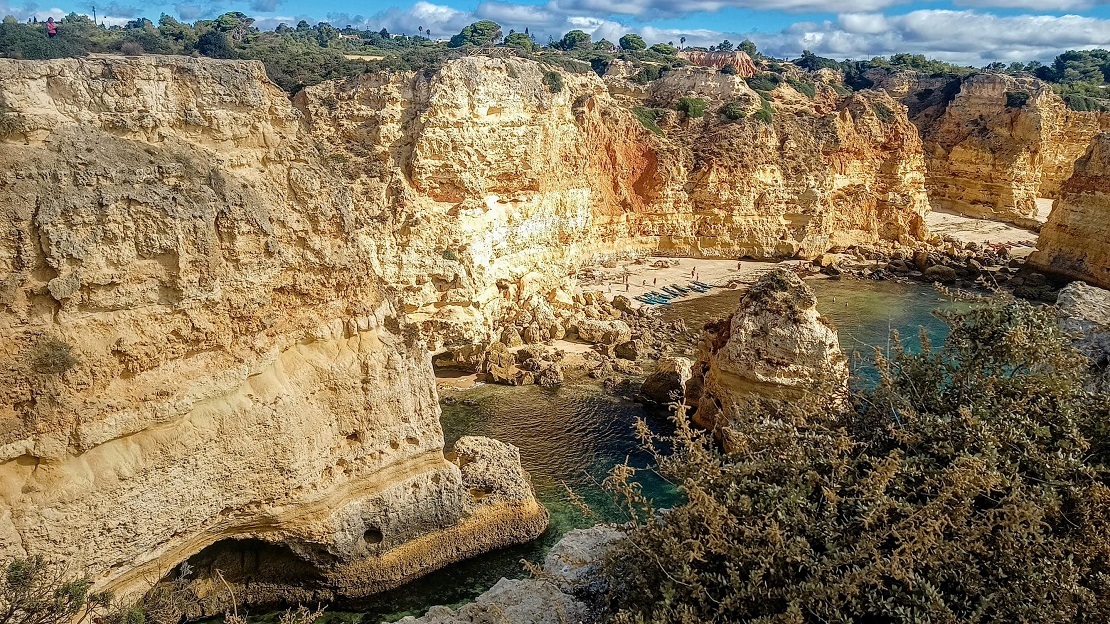
Some coastal areas remain wild, offering an ideal setting for slow tourism, with exceptional landscape beauty to enjoy.
The Algarve offers more than just ‘Blue Flag beaches’. It is a potential future UNESCO Global Geopark, boasting a rich rural hinterland, hiking trails to explore throughout the year and much more.
The Vale dos Sete Suspensos (Seven Hanging Valleys), for instance, is a magnificent trail winding along the coast and across promontories for about 6 kms, offering unique view points to admire beautiful seascapes.
This coastal route reveals hidden beach caves and secret passages through the rocks, sights that would otherwise remain unseen.